



Smart City: How the City of Lambersart achieved ROI on its LoRaWAN network in 5 years
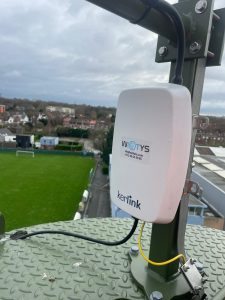
Lambersart is a city of 27,000 inhabitants near Lille in France which is strongly committed to a municipal policy focused on CSR and sustainability. This is why the city chose to anchor its digital transformation in concrete operational needs: better water management, reduced energy consumption, improved indoor air quality in municipal buildings, optimized street lighting, and more.
By leveraging a private LoRaWAN network powered by Kerlink gateways, Lambersart has deployed more than 16 use cases over the past eight years, making it one of France’s most IoT-mature local authorities. Here, every deployment addresses a real, measurable need with a direct impact on the daily lives of both municipal staff and residents. The result: full return on investment achieved within five years.
The challenge: modernising city services while keeping costs under control
Like many mid-sized municipalities, Lambersart faced well-known constraints: aging infrastructure, tight budgets, and growing expectations from both elected officials and citizens. In 2018-2019, the city turned to IoT technologies to address these challenges. The objective was clear: collect data from numerous assets spread across the city using a reliable, cost-effective solution with no dependency on mobile network operators, while remaining flexible enough to support both pilot projects and large-scale deployments.
The solution: a scalable private LoRaWAN network serving the city
LoRaWAN quickly emerged as the ideal technology to build an autonomous, low-power network capable of covering the entire municipality. Starting in 2018-2019, Lambersart began deploying its private LoRaWAN network using Kerlink gateways, driven by Pierre Ciemniejewski, IoT, Open Data & Digital Development Project Manager. His approach was pragmatic and incremental: first stabilize the network infrastructure, then progressively multiply use cases by reusing the existing foundation.
“We proved that a city of 27,000 inhabitants can deploy the same type of smart infrastructure as large metropolitan areas, at a much lower cost. The key is to build a private network that we fully control and that becomes more valuable with every new use case.”
Pierre Ciemniejewski, IoT, Open Data & Digital Development Project Manager – City of Lambersart
The architecture combines outdoor Wirnet iStation gateways for citywide coverage with Wirnet iFemtoCell gateways to ensure optimal connectivity inside municipal buildings.
The results:
Eight years after the first deployments, Lambersart now operates more than 16 use cases, all delivering positive and measurable outcomes. Among the most significant:
- Smart public lighting management across 60 electrical cabinets, resulting in a 30% reduction in energy costs
- Energy management for municipal buildings, generating 30% to 40% savings on electricity bills
- Water consumption monitoring, leading to reductions of approximately 10% to 15%
Since the overall return on investment was achieved within five years, every new use case now benefits from an already amortized infrastructure. The only additional investment required is the purchase of new sensors.
Conclusion
While the many deployed use cases already address a large share of the needs expressed by elected officials and residents, the City of Lambersart has no intention of stopping there. The robustness of its LoRaWAN network and the connectivity provided by Kerlink form a solid foundation that enables the city to continue innovating confidently, without having to start from scratch for each new project.
A successful smart city is, above all, scalable and future-proof: it evolves alongside the city’s needs, political priorities, and technological progress. New use cases are already being evaluated and tested, all guided by the same goal: saving resources, simplifying municipal operations, and improving services delivered to citizens.